
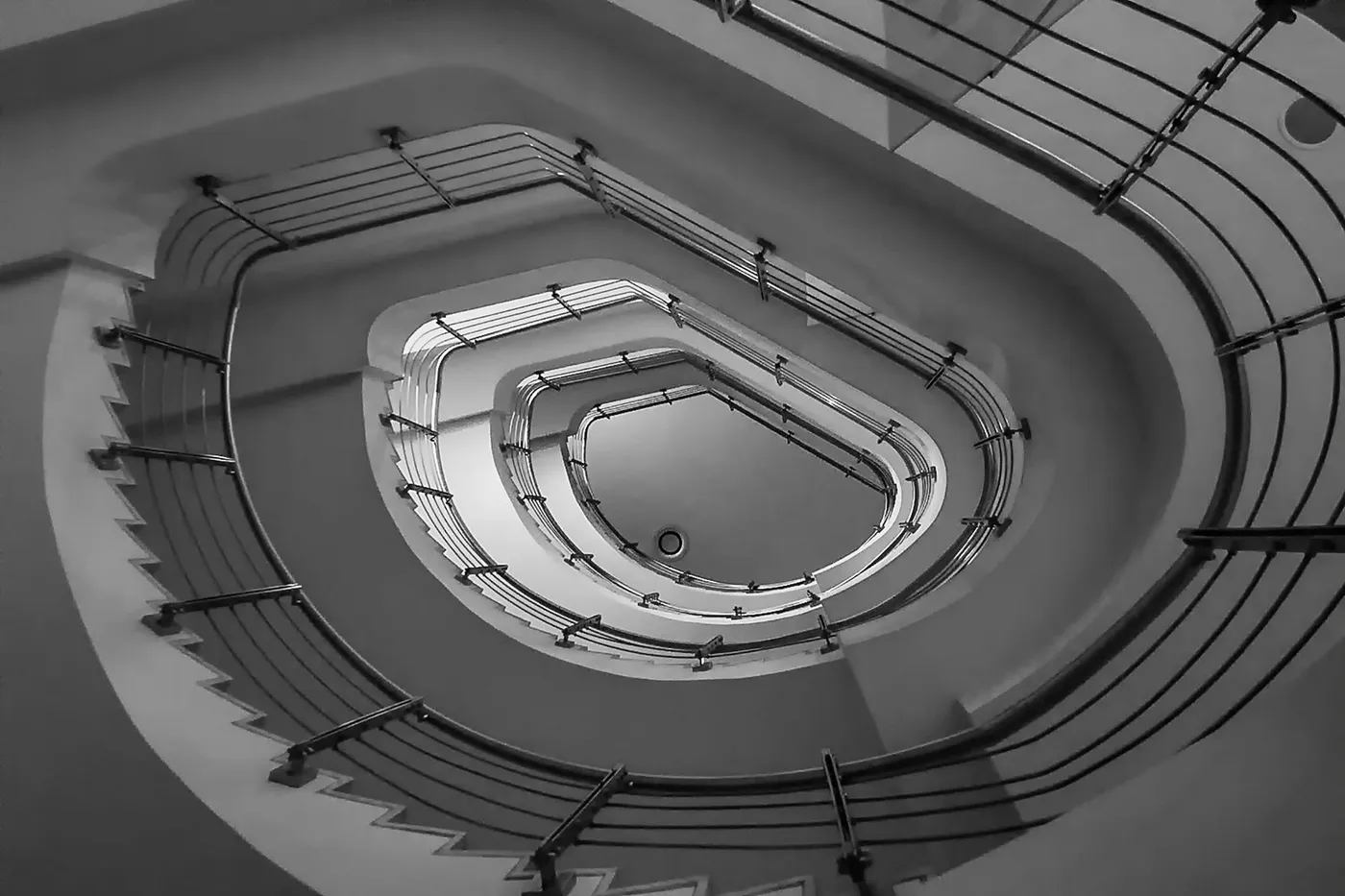
Balustrade, handrail, guard-rail: what's the difference?
Three words for a very similar use, but not for the same reasons — and a mix-up that changes nothing about the regulatory thresholds.
The same piece — a wrought iron structure that stops you falling along a staircase, terrace or balcony — can be called a “balustrade”, a “handrail” or a “guard-rail” depending on who’s talking about it. That’s not a mistake: these three words coexist because they each emphasise something different.
Guard-rail: the regulatory term
“Guard-rail” is the word you’ll find in standards documents, insurance quotes or planning paperwork. It’s a generic, functional term: it covers any structure whose role is to prevent a fall from height. A guard-rail can be made of wood, glass, stainless steel or wrought iron — the material isn’t part of the definition.
Handrail: everyday usage
“Handrail” is the word most naturally used in speech for a staircase or balcony guard-rail, with no particular connotation about its style. You’d say “the staircase handrail” just as easily for a plain tubular piece as for a highly ornate one.
Balustrade: the decorative register
“Balustrade” is the term that shows up most often once a piece takes on a strong decorative register — scrollwork, interlacing, repeated patterns. It’s historically the word tied to balusters (the small vertical posts that make up a classic balustrade), and it remains the most common today for a terrace or balcony visible from the street, where looks matter as much as the protective function. See our terrace balustrade and balcony balustrade pages.
A difference of vocabulary, not of rule
This is the key point to remember: whatever word is used, the regulatory thresholds are identical. The NF P01-012 standard requires the same minimum height (1.00 m) and maximum gap (11 cm) for a richly ornate balustrade as for a bare tubular guard-rail. The vocabulary describes a style, not a separate regulatory category.
This holds indoors too: nothing stops you fitting a decorative balustrade inside a house, along a staircase or a mezzanine — see our indoor balustrade page. It’s mostly outdoors, on a terrace or balcony, that this more decorative vocabulary is most common.
And the infill, in all this?
The word that most concretely changes the quote isn’t “balustrade” or “guard-rail” — it’s the infill chosen: straight balusters, wrought iron scrollwork, sheet metal or cable panels. That’s what sets the final style and a good part of the price — see our infill and patterns page for the detail.
In short: call your project whatever you like, the workshop will know what you mean. What matters for the quote is the location, the length to be fitted and the infill in mind.