

What the standard requires for a balustrade
The French NF P01-012 standard, revised in November 2024 and phased in since June 2025, sets the dimensional requirements for guard-rails — whatever the piece is called (rail, handrail, balustrade).
What the standard sets
| Minimum height — 1.00 m Measured from the tread nose or the finished floor level |
| Maximum infill gap — 11 cm The threshold used to stop a young child's head from passing through |
| Secured lower zone — 45 cm, solid or non-climbable Stops a child from climbing using the structure as a foothold |
| Horizontal spacing ("ladder" effect) — < 18 cm Limits horizontal elements that would make climbing easier |
A co-ownership regulation or a public-facing building may impose extra requirements — the workshop checks this with you before any pricing.
What gets checked before, not after, fitting
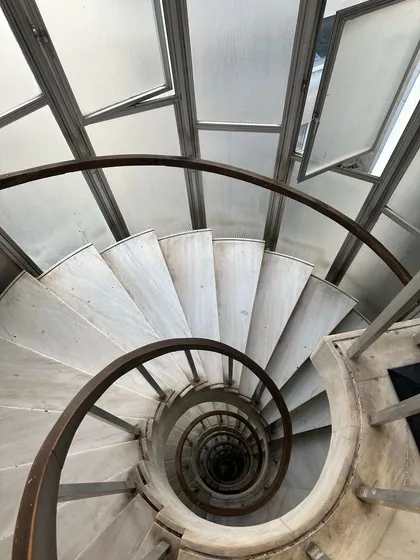
An ornate pattern can fail inspection
The 11 cm gap is checked at any point in the infill, not just between two straight balusters — very open scrollwork can exceed it without it being obvious before fitting.

The lower zone (45 cm) is the most commonly overlooked point on a balustrade with a lighter decorative register.
Rail, handrail, balustrade
Different words, the same regulatory thresholds.
About the standard
Does my existing balustrade, fitted before the 2024 revision, need to be brought up to the new standard?
Not systematically — the obligation to comply depends on the context (sale, rental, public-facing building). On an already-equipped private home, an existing piece isn't automatically due for replacement, but a replacement is an opportunity to meet the current thresholds.
Does the standard differ between indoor and outdoor?
No, the height and gap thresholds are identical in both cases — see our terrace balustrade and indoor balustrade pages for what actually changes by location.
Who checks compliance once the balustrade is fitted?
There's no systematic inspection for a private home, but compliance remains your responsibility — the workshop designs every piece to meet the thresholds in force, without guaranteeing an official certification, which isn't its role.
Unsure your project complies?
The workshop discusses it with you before any pricing, free and with no obligation.