
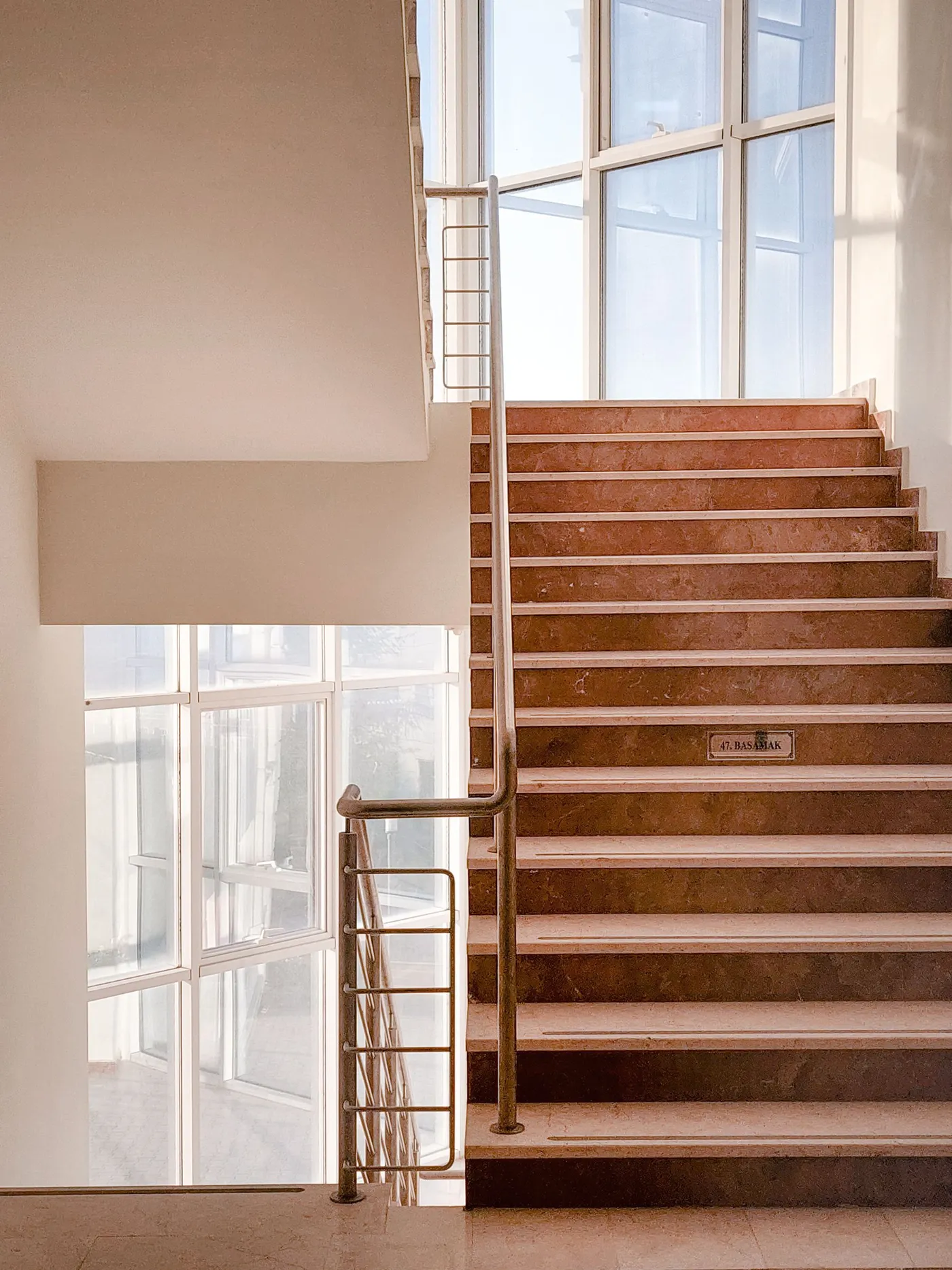
NF P01-012 standard: what to know before ordering
Height, gap, secured lower zone: four thresholds to know before ordering, whatever your piece ends up being called.
The French NF P01-012 standard, revised in November 2024 and phased in since June 2025, sets the dimensional requirements for guard-rails — whatever the piece is called (rail, handrail, balustrade, see our article on the difference between these three terms). Here are the four thresholds to know before designing your project. The full detail is on our guard-rail regulations page.
Minimum height: 1.00 m
The minimum required height is 1.00 m, measured from the tread nose on a staircase, or from the finished floor level elsewhere. This is a commonly mixed-up point on a staircase: the reference is the tread nose, not the landing floor — a mix-up that can throw the figure off by several centimetres if the survey isn’t done carefully.
Maximum infill gap: 11 cm
No gap in the infill should allow an 11 cm diameter sphere to pass through — a gauge chosen to stop a young child’s head from fitting through. This threshold applies at any point in the pattern, not just between two straight balusters: an infill with very ornate scrollwork can exceed this threshold locally without it being visible before fitting, if the pattern hasn’t been checked beforehand.
Secured lower zone: 45 cm
The first 45 cm from the ground must be solid or non-climbable, to stop a child from climbing using the structure itself as a foothold. This is a more easily overlooked point than the previous two, particularly on a balustrade with a lighter decorative register.
Horizontal spacing (“ladder” effect): under 18 cm
Horizontal infill elements must be spaced less than 18 cm apart, to limit what’s known as the “ladder effect” — horizontal bars spaced too far apart that would make climbing easier.
Does the standard apply differently indoors?
No. The height and gap thresholds are identical indoors and outdoors — see our indoor balustrade, terrace balustrade and balcony balustrade pages. What actually changes by location is the finish (galvanising, powder-coating) and weather exposure — not the regulations.
Does an old balustrade need to be brought up to standard?
Not systematically: the obligation to comply depends on the context (sale, rental, public-facing building). On an already-equipped private home, an existing piece isn’t automatically due for replacement — but a replacement is an opportunity to meet the current thresholds.
Who checks compliance?
There’s no systematic inspection for a private home, but compliance remains the owner’s responsibility. The partner workshop designs every balustrade to meet the thresholds in force, with measurements checked before fabrication — without guaranteeing an official certification, which isn’t its role.
Unsure your project complies? Request a quote, the workshop discusses it with you before any pricing.